 CALL/TEXT:
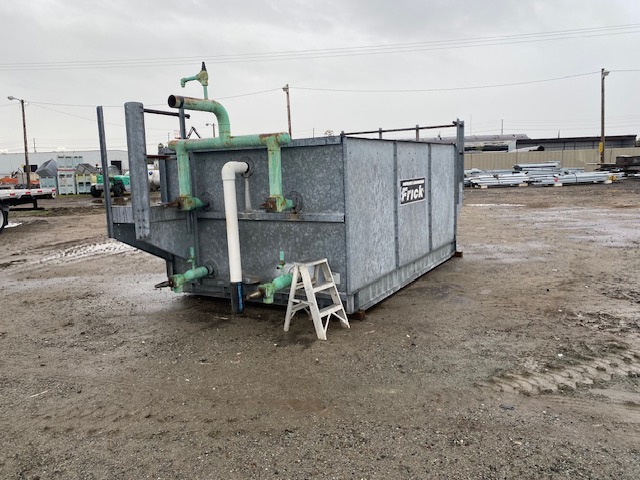
Industrial refrigeration is the backbone of temperature-controlled operations across food processing, cold storage, pharmaceuticals, chemical manufacturing, and energy production. Unlike commercial refrigeration, which serves retail or comfort cooling needs, industrial refrigeration systems are engineered for continuous operation, large-scale capacity, and precise temperature control under demanding conditions.
Understanding how industrial refrigeration works and the role of its core components is essential for facility managers, engineers, and operations leaders responsible for uptime, safety, and energy efficiency. This guide breaks down the fundamentals of industrial refrigeration systems, with a closer look at two of the most critical elements: compressor packages and evaporative condensers.
Understanding Industrial Refrigeration Systems
At its core, an industrial refrigeration system removes heat from a process or space and rejects it elsewhere using a closed-loop cycle. Most systems rely on industrial refrigerants such as ammonia (NH₃), CO₂, or halocarbons, chosen for their thermodynamic efficiency and suitability for large-scale applications.
A complete industrial refrigeration system typically includes:
- Compressors
- Condensers
- Evaporators
- Control systems
- Piping, valves, and safety components
While every component plays a role, compressors and evaporative condensers are the heart of system performance, reliability, and operating cost.
Compressor Packages: The Driving Force of Industrial Refrigeration
Compressors are responsible for circulating refrigerant throughout the system by increasing pressure and temperature so heat can be effectively rejected. In industrial refrigeration, compressors are not standalone machines. They are typically delivered as integrated compressor packages designed for durability, serviceability, and precise control.
Types of Industrial Refrigeration Compressors
The most common compressor technologies used in industrial applications include:
- Reciprocating compressors for smaller to mid-sized loads
- Screw compressors for high-capacity, continuous-duty systems
Leading manufacturers such as Vilter, Mycom, and Frick have become industry benchmarks due to their proven performance in ammonia and CO₂ refrigeration environments.
Why Compressor Packages Matter
A properly engineered compressor package improves:
- Energy efficiency across varying loads
- System reliability and uptime
- Ease of maintenance and service access
- Integration with modern control platforms
High-quality compressor packages are critical in facilities where downtime results in product loss, regulatory risk, or operational disruption.
Evaporative Condensers: Efficient Heat Rejection at Scale
Once heat is absorbed from the process and compressed, it must be rejected from the system. This is where evaporative condensers play a vital role.
Evaporative condensers remove heat by combining air movement and water evaporation, making them significantly more energy-efficient than air-cooled alternatives in large industrial applications.
How Evaporative Condensers Work
Evaporative condensers operate by:
- Passing warm refrigerant vapor through condenser coils
- Spraying water over the coils
- Using airflow to promote evaporation and heat transfer
- Condensing refrigerant back into a liquid state
This process allows systems to reject large heat loads with lower fan energy and reduced refrigerant pressures.
Industry-Leading Evaporative Condenser Brands
Manufacturers such as Evapco, BAC (Baltimore Aircoil Company), and Frick/York are widely recognized for producing high-performance evaporative condensers used in mission-critical industrial refrigeration systems worldwide.
These brands are trusted for:
- Robust corrosion-resistant construction
- Long service life in harsh environments
- Consistent thermal performance
- Compliance with industry and safety standards
Why Component Selection Defines System Performance
Industrial refrigeration systems are long-term infrastructure investments. Selecting proven compressors and condensers from established manufacturers directly impacts:
- Total cost of ownership
- Energy consumption
- System scalability
- Safety and regulatory compliance
Facilities that rely on trusted brands and properly matched components benefit from predictable performance and fewer operational surprises over the life of the system.
Industrial Refrigeration Across Critical Industries
Industrial refrigeration is essential in sectors where temperature control is non-negotiable, including:
- Cold storage and distribution centers
- Food and beverage processing plants
- Pharmaceutical manufacturing
- Petrochemical and chemical processing
- Ice rinks and industrial process cooling
Each application demands a system engineered for its specific load profile, environment, and operational requirements.
Building Reliable Industrial Refrigeration Systems
Understanding the role of compressor packages and evaporative condensers is the first step in designing, upgrading, or maintaining an industrial refrigeration system. These components work together to deliver efficiency, reliability, and long-term value when properly selected and integrated. As the industry continues to move toward higher efficiency standards, natural refrigerants, and smarter controls, proven equipment from manufacturers like Vilter, Mycom, Frick, Evapco, BAC, and York remains foundational to high-performing industrial refrigeration systems.

Refrigeration Equipment Professionals (REP) is a trusted supplier of industrial refrigeration systems and surplus/used equipment, offering compressors, chillers, condensers, evaporators, ice machines, freezers, coolers, pumps, motors, complete plants, and services like purchasing, refurbishing, shipping, export crating, and storage/consignment support. With 25+ years of experience and clients across North America, Latin America, the Middle East, and Asia, we deliver reliable, cost-effective refrigeration solutions worldwide.