 CALL/TEXT:
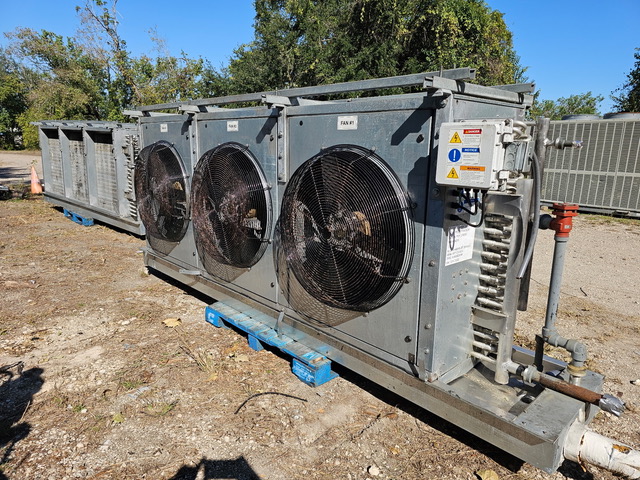
Capital investment decisions in industrial refrigeration are rarely simple. Systems are large, mission-critical, and expensive, with long operational lifespans and strict performance requirements. As operating costs rise and sustainability targets tighten, many facility owners and operators are rethinking how they deploy capital. One strategy gaining traction across cold storage, food processing, and industrial facilities is the use of used refrigeration equipment.
When evaluated correctly, used industrial refrigeration equipment is not a compromise. It is a deliberate financial and operational decision that balances performance, reliability, and return on investment for both ammonia and industrial refrigeration systems.
Why Used Refrigeration Equipment Is a Strategic Choice
Industrial refrigeration assets are engineered for durability. Compressors, condensers, vessels, and heat exchangers are designed to operate for decades when properly maintained. This long service life creates a unique opportunity in the secondary market.
Organizations choose used equipment for several strategic reasons:
- Reduced capital expenditure without sacrificing core functionality
- Faster project timelines compared to new-build lead times
- Access to proven industrial-grade equipment
- Improved financial flexibility for expansions or retrofits
For ammonia and large-scale industrial systems, where equipment costs represent a significant portion of total project CAPEX, the savings can be substantial.
CAPEX Optimization Without Operational Risk
New refrigeration equipment often commands premium pricing driven by material costs, extended manufacturing lead times, and global supply chain constraints. Used industrial refrigeration equipment offers a way to optimize capital deployment while maintaining system performance.
When sourced responsibly, used equipment allows facilities to:
- Allocate capital toward controls, automation, or energy upgrades
- Expand capacity without delaying operations
- Upgrade aging systems incrementally instead of all at once
The key is not simply buying used, but buying verified, application-appropriate equipment.
Used Equipment in Ammonia Refrigeration Systems
Ammonia refrigeration systems are especially well-suited to the secondary equipment market. Ammonia-compatible components are typically built with conservative safety margins, heavy-duty materials, and serviceability in mind.
Common ammonia-rated equipment available on the used market includes:
- Compressors and compressor packages
- Condensers and evaporative heat rejection equipment
- Pressure vessels and receivers
- Industrial valves and controls
With proper inspection, documentation, and refurbishment where required, used ammonia refrigeration equipment can meet the same operational standards as new installations.
Sustainability and Circular Asset Use
Beyond cost savings, used refrigeration equipment supports sustainability goals. Reusing industrial assets reduces demand for new manufacturing, lowers embodied carbon, and extends the lifecycle of equipment already in circulation.
For organizations tracking ESG metrics or pursuing sustainability certifications, reconditioned and reused industrial equipment aligns with:
- Circular economy principles
- Reduced environmental impact
- Responsible asset management
This approach allows facilities to improve performance without unnecessary resource consumption.
Risk Management: What Separates Smart Purchases From Costly Mistakes
Not all used industrial refrigeration equipment is created equal. The difference between a smart capital strategy and operational risk lies in due diligence and sourcing.
Key considerations include:
- Equipment history and application suitability
- Inspection, testing, and documentation
- Compliance with current codes and standards
- Availability of service support and replacement parts
Working with experienced industry specialists ensures that used equipment is evaluated not just for price, but for long-term reliability and system compatibility.
Used Equipment as Part of a Long-Term Strategy
Used refrigeration equipment is not only for budget-constrained projects. It is increasingly used as part of broader capital planning strategies, including:
- Phased facility expansions
- Temporary or transitional capacity increases
- Redundancy and backup systems
- Rapid-response replacements during outages
In these scenarios, speed, availability, and cost predictability are often more valuable than sourcing new equipment.
Choosing the Right Partner Matters
The success of a used equipment strategy depends on expertise. Beyond inventory, organizations need guidance on selection, integration, and lifecycle planning. This is where experienced industrial refrigeration partners add the most value.
By approaching used equipment as a category solution rather than a one-off purchase, facilities gain access to technical insight, application knowledge, and long-term system thinking.
A Smarter Way to Invest in Industrial Refrigeration
Used industrial refrigeration equipment represents a practical, forward-thinking approach to capital investment. When aligned with operational goals, safety standards, and sustainability priorities, it delivers measurable value without unnecessary risk.
For ammonia and industrial refrigeration systems, the smartest strategy is not always buying new. It is making informed decisions that balance performance, cost, and longevity, supported by partners who understand the full lifecycle of industrial refrigeration assets.

Refrigeration Equipment Professionals (REP) is a trusted supplier of industrial refrigeration systems and surplus/used equipment, offering compressors, chillers, condensers, evaporators, ice machines, freezers, coolers, pumps, motors, complete plants, and services like purchasing, refurbishing, shipping, export crating, and storage/consignment support. With 25+ years of experience and clients across North America, Latin America, the Middle East, and Asia, we deliver reliable, cost-effective refrigeration solutions worldwide.